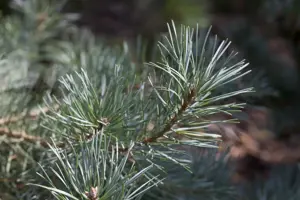
Pulsatilla vulg. 'Pulsar Red Shades' - P9
Pulsatilla vulg. 'Pulsar Red Shades' - P9
Description
The Pasque flower (Pulsatilla vulgaris) is an upright perennial that forms blue-violet, bell-shaped flowers from March to May. Decorative, silvery fruits develop from the flowers. Its deeply slit leaves are grey-green. In a sunny location with well-drained, humus-rich soil, it usually reaches a height of approx. 25 cm and grows to a width of approx. 30 cm. The Pasque flower is well tolerant of frost.
Synonym
Synonyms (botanical): Anemone pulsatilla.
Bulletpoints
* Fruit ornamentation
* the flowers are heavily favoured by bees, bumblebees and hoverflies
leaves
The deciduous leaves of the Pasque flower are grey-green, deeply slit.
Spread
Europe.
Frost hardiness
The Pasque flower has good frost hardiness.
Growth
Upright.
Water
This plant has a low water requirement.
Location
Preferred location in a sunny position.
Soil
Normal soil.
Planting time
Planting: Autumn, depending on variety also in spring.
Care
- The plant must be protected from winter moisture.
- This plant should not be cut back in autumn, as it looks pretty in winter, or the dead plant parts serve as winter protection. Only prune in spring before new shoots appear.
Flower
Pulsatilla vulgaris forms bell-shaped, blue-violet flowers from March.
Fruit
The silvery fruits of Pulsatilla vulgaris are particularly decorative.
Worth knowing
Plant or parts of the plant are poisonous.
Use
Group planting, rock garden, bee pasture, steppe garden, alpine garden
- Article number260
-
EAN codePUVPRSHA-0P9
- Latin namePulsatilla vulg. 'Pulsar Red Shades'
- catalogLandscape shop