Quercus robur 'Concordia' - 40-60 CM C1.5 WHIP
Quercus robur 'Concordia' - 40-60 CM C1.5 WHIP
Description
The Common oak 'Concordia' (Quercus robur) is a broad, roundish, picturesque large tree with decorative, light green fruits. These are small. It produces light green flowers arranged in catkins from April to May. The Common oak 'Concordia' also bears leathery, egg-shaped, dark green leaves with yellow markings. In a sunny to semi-shady location with well-drained, nutrient-rich soil, it usually reaches a height of around 10 metres and grows to a width of around 6 metres.
Synonym
Synonyms (botanical): Quercus pedunculata.
Bulletpoints
* Fruiting ornament
* picturesque large tree
* attractive orange-yellow autumn colouring
* tolerates pruning
* resistant to urban climates, wind-resistant, smoke-hardy, heat-loving, flood-tolerant
Leaves
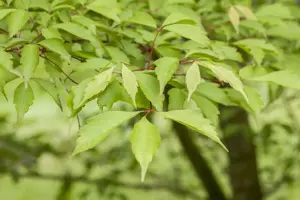
The deciduous leaves of the Common oak 'Concordia' are dark green, yellow, ovate, leathery, alternate, lobed. They are about 10 - 15 cm tall. Common oak 'Concordia' turns bright orange-yellow in autumn.
Bark
Dark grey, deeply fissured, longitudinally furrowed bark makes this plant an eye-catcher in any garden.
Spread
Central Europe.
Frost hardiness
The Common oak 'Concordia' has good frost hardiness.
Growth
Common oak 'Concordia' is a broad, roundish growing, picturesque large tree with a translucent, loose crown. It usually reaches a height of 6 - 10 m and is approx. 4 - 6 m wide. As a rule, it grows 20 - 40 cm per year.
Water
The plant has a medium water requirement.
Pruning
This plant is tolerant of pruning.
Location
Preferred location in a sunny to semi-shady position.
Soil
Normal soil.
Planting time
Container plants can be planted all year round, except when the ground is frozen and in summer heat (over 30°C).
Care
Cut and saw wounds and broken branches should be treated as quickly as possible with a wound sealant to prevent pathogens from entering the plant.
Flower
The light green flowers of Common oak 'Concordia' appear in catkins from April to May.
Fruit
The light green fruits of Quercus robur 'Concordia' are particularly decorative. These appear from September and are small.
Use
Solitary, ornamental shrub, landscape, green border
Root
Quercus robur 'Concordia' is a deep-rooting plant and, depending on the soil, forms densely branched roots.
- Article number40
-
EAN codeQURCONCO-4060C15SPI
- Latin nameQuercus robur 'Concordia'
- catalogLandscape shop